YouTube Partners with TuneCore and Believe Artists to Provide Music for YouTube Shorts
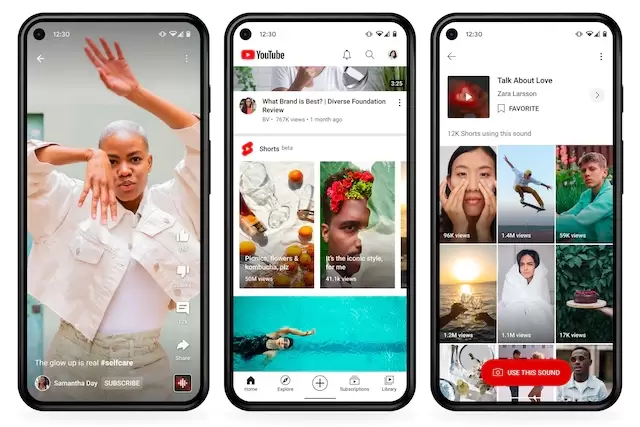
 Leading independent DIY digital music distributor TuneCore and parent company, Paris-based digital music distribution leader and artist development company Believe have partnered with YouTube to provide music for the Shorts platform. Believe is one of the world’s leading digital music companies. TuneCore Music Publishing Administration assists songwriters by administering their compositions through licensing, registration, worldwide royalty collections, and placement opportunities in film, TV, commercials, video games and more. Nah, I'm going to stay home and play video games. When creators use a song clip for their short video, the music is linked to the artist’s full length song, music video and bio on YouTube proper. YouTube Shorts is a new short form video experience for artists and creators, who use mobile phones to shoot brief 15-60 second videos. It is also sometimes used to make fun of people who are overly patriotic. Viewers are able to go directly to the artist’s videos on YouTube as well as to the artist’s YouTube channels. As a key music partner to YouTube, Believe and TuneCore’s vast roster of music has been included in the YouTube Shorts music library made available to creators to include in their videos. TuneCore Music Distribution services help artists, labels and managers sell their music through Spotify, Apple Music, Amazon Music, Deezer, TikTok, Tencent and more than 150 download and streaming stores worldwide, while retaining 100 percent of their sales revenue and rights for a low annual flat fee.
Believe offers its various solutions through a portfolio of brands including TuneCore, Believe Distribution Services, Nuclear Blast, Naïve, Groove Attack and AllPoints. Stated Andreea Gleeson, Co-head and Chief Revenue Officer, TuneCore, “TuneCore is thrilled to partner with YouTube in introducing YouTube Shorts to the platform’s robust creator community. TuneCore, part of Believe, is headquartered in Brooklyn, NY, with offices in Los Angeles, Nashville, Atlanta, and Austin, and operates globally through local teams based in the UK, Germany, France, Belgium, Italy, Russia, Brazil, Mexico, Nigeria, South Africa, India, Japan and Singapore across 4 continents. YouTube Shorts enjoyed a successful initial trial run in India, where other short form video services are banned. The trial resulted in over 3.5 million views per day, and since expanding the program, the YouTube Shorts player has surpassed 6.5 billion daily views globally. The YouTube video went viral. The YouTube video is too long. The company recently announced the YouTube Shorts Fund, a $100M fund for creators. The platform initially arrived in the US in beta back in March and was rolled out to all US-based creators this month with more tools and countries to follow.
JOMO" stands for "joy of missing out" and is used to express happiness with NOT wanting to do activities that are within the "norm." For example, "Hey, do you want to go to the party tonight? It's a way of expressing happiness. It's a way of expressing confusion. You could also say, "His speech was on fleek," meaning that the speech was really good. If something is "next level," it means that it's really good and went above your expectations. When a party or event is "lit," it means that it is "cool" in nature. This party is cool. I can't find the party. To be "turnt up" at a party or an event means that you are having fun. Another common phrase is "adulting," which is used to express discomfort in the "adult life." Aspects of growing up, like paying bills or dealing with a broken-down car, are all considered to be common annoyances with "adulting." Some phrases are also used to dismiss someone from a conversation.
It's basically used to say that you really, really like something humorous. I gotta bounce." You could also say "Tom just bounced from the party. This party is boring. Did you hear that speech he gave? If someone is being "extra," it means that they are overusing their speech patterns and body language in a dramatic fashion. It's used to humiliate someone. Another common phrase is "basic." This is used to describe someone who is average, and lacking special, or unique, qualities. Someone who is acting "salty" is typically upset with a situation. To "humble brag" is to humbly brag about yourself, someone else or about an object. Someone is being professional. If someone is "thirsty," it usually means that they want something that is not related to food or drinks. The person thinks the food is too salty. The person is upset. The person is surprised. A person wants proof in the form of photos. These French fries aren't great. These French fries are over-cooked. This artic le was done by GSA Conten t Generato r DEMO!
Post a Comment for "YouTube Partners with TuneCore and Believe Artists to Provide Music for YouTube Shorts"